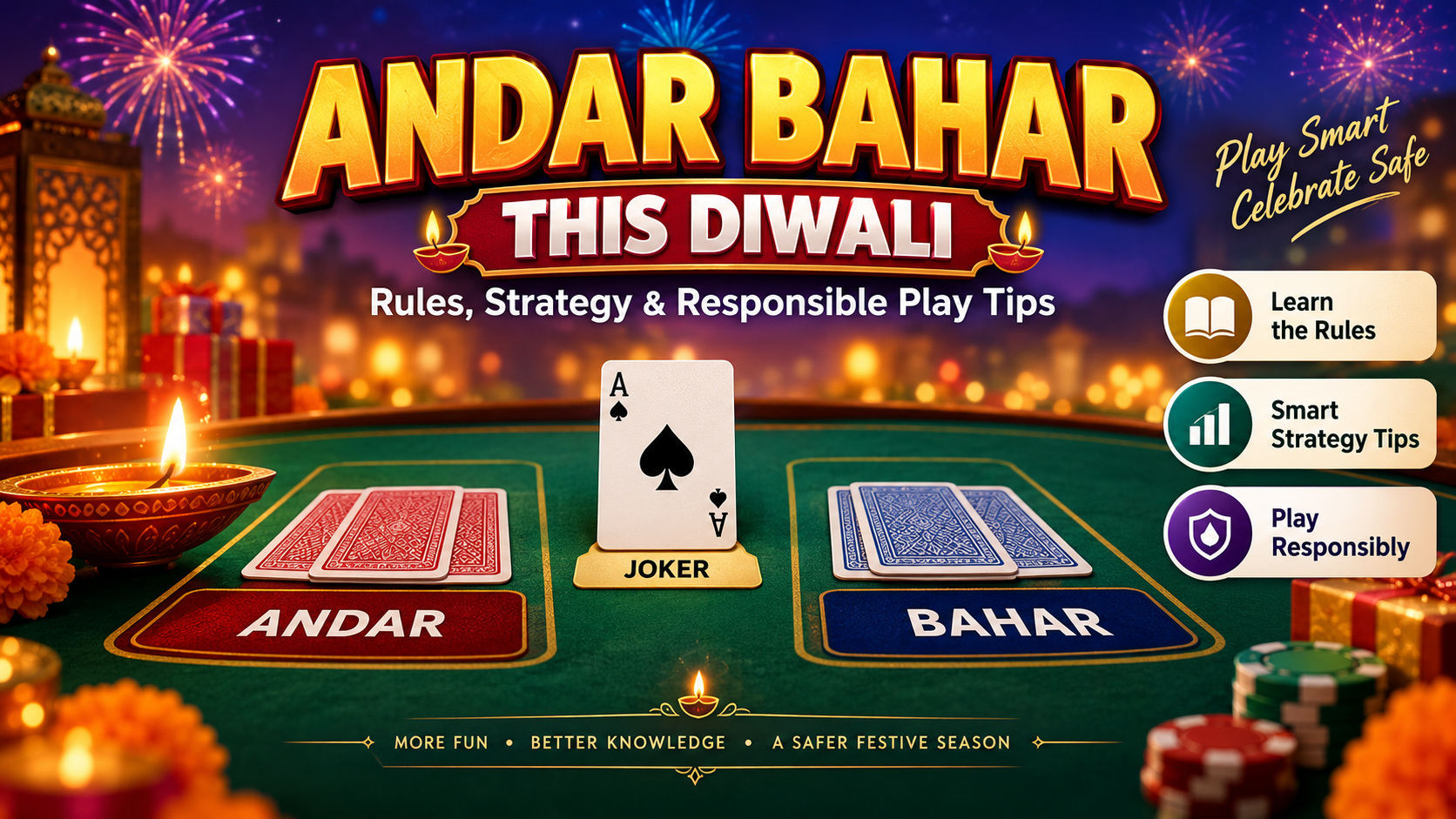
Diwali evenings and card games go hand in hand in most Indian homes, and Andar Bahar is usually the first game that comes out once the diyas are lit. It moves fast, the rules take two minutes to learn, and everyone from your grandmother to your cousin's college friends can join a round without any confusion. If you plan to play Andar Bahar this Diwali, here is a simple refresher on the rules, a few practical strategy tips, and some responsible play guidance so the festive fun stays fun.
ALSO READ:
What Is Andar Bahar? A Quick Rules Recap
Andar Bahar Teen Patti Game that started in South India and now runs on almost every real-money gaming app. The dealer places one card face up in the middle of the table. This is the 'joker' or reference card. Players then bet on whether a matching card, same value, any suit, will land first on the Andar (left) pile or the Bahar (right) pile. The dealer deals cards one by one, alternating sides, until a match appears. Whichever side gets the match first wins that round. There is no shuffling mid-round and no hidden math, which is exactly why the game feels so easy to pick up during a Diwali get-together.
👉 Download Now and Claim a welcome bonus → mymasterteenpatti.com
Why Andar Bahar Fits Right Into Diwali Gatherings
Diwali nights are about short bursts of fun between meals, rangoli touch-ups, and firecracker breaks, and Andar Bahar suits that rhythm. A single round rarely takes more than a minute, so a group of six or eight people can play several rounds while snacks go around the room. There is no long learning curve like Rummy or Teen Patti, so first-time players do not feel left out. That mix of speed and simplicity is a big reason the game shows up at so many Diwali card tables and, increasingly, on gaming apps during the festive season.
Practical Andar Bahar Strategy Tips for Diwali Sessions
Watch the Pattern, Don't Chase It
Each round is independent, and the cards do not remember what happened before. Still, many players like to note which side has won more often in a session before placing a bet. Treat this as a light observation, not a formula. No pattern guarantees the next result.
Fix Your Diwali Budget Before the Cards Come Out
Decide your play amount before the first card is dealt, the same way you would set a budget for gifts or crackers. Keep it separate from festival spending, and stop once you hit that number, win or lose. A fixed budget keeps the game a fun part of Diwali instead of a stressful one.
Understand the Andar vs Bahar Payout Difference
In the traditional version, Andar tends to have a very slightly better probability of winning than Bahar because of how the first card and deal order work, though the difference is small. Payout ratios vary by platform, so check the paytable on your chosen app before you bet, rather than assuming both sides pay the same.
Playing Andar Bahar Responsibly This Diwali
Card games during Diwali should stay a part of the celebration, not the reason for it. If you choose to play Andar Bahar for real money on an app, treat it the same way you would treat any festive expense: plan it, cap it, and walk away once you have reached your limit.
Responsible Gaming Note Games of skill such as Rummy have been recognised as distinct from gambling by the Supreme Court of India (State of Andhra Pradesh v. K. Satyanarayana, 1968), and industry bodies such as the All India Gaming Federation (AIGF) work with operators on self-regulation and player safety standards. Separately, under India's tax law, net winnings from online games are taxed at 30% under Section 115BBJ, with TDS deducted under Section 194BA, so any Diwali winnings on real-money apps are subject to tax at source. Play is meant for adults only, and state-level restrictions on real-money gaming may apply, so check your local rules before playing for cash. |
This Diwali, keep your 3 Patti Andar Bahar sessions light, budgeted, and fun. If you want to try a round yourself, play Andar Bahar on MyMasterTeenPatti, and remember to play responsibly and within your set limit.
Frequently Asked Questions
Is Andar Bahar a game of skill or luck?
It is largely a game of chance. Each card dealt is independent of the last, so no strategy can guarantee a win. Betting patterns can guide decisions, but they do not change the odds.
Is Andar Bahar legal in India?
Real-money card games sit in a legal grey area that varies by state. Some states allow them under skill-gaming rules, while a few restrict real-money play entirely. Always check your state's current rules before playing for cash.
Do I have to pay tax on Andar Bahar winnings?
Yes. Net winnings from online real-money games are taxed at 30% under Section 115BBJ of the Income-tax Act, and platforms deduct TDS under Section 194BA at the time of withdrawal or at year-end.
How many players work best for a home Diwali round?
Four to eight players keep the game lively without slowing it down. Larger groups still work, but rounds take slightly longer as more side bets get placed.
Can beginners play Andar Bahar during Diwali?
Yes. The rules take about two minutes to explain, which makes it one of the easier games to introduce to first-time players at a Diwali gathering.